
Construction safety depends heavily on the condition of the ground supporting a structure. Every building, bridge, and infrastructure project transfers loads into the soil below, which means weak or unpredictable ground conditions can lead to settlement, tilting, or structural damage over time.
Standard Penetration Test plays a central role in understanding these subsurface conditions before any structural design begins. Through Standard Penetration Test results, engineers gain practical data about soil strength, density, and layering across a proposed construction site.
Standard Penetration Test is widely used across the Philippines due to the country’s variable soil conditions and exposure to seismic activity. Reliable soil investigation using Standard Penetration Test helps engineers design safer foundations and reduce construction risks.
In geotechnical work led by DPWH-BRS accredited laboratories such as Inch-On Materials Testing Laboratory, Standard Penetration Test forms a key part of field investigation services that support both private and public construction projects.
What Standard Penetration Test Means in Geotechnical Engineering
Standard Penetration Test is a field testing method used to evaluate the resistance of soil against penetration. This test provides an indication of soil density and consistency, which are critical for foundation design.
Standard Penetration Test involves driving a split-spoon sampler into the soil at the bottom of a borehole using a standardized hammer weight and drop height. The number of hammer blows required to drive the sampler a specific depth is recorded as the N-value.
Standard Penetration Test results allow geotechnical engineers to interpret soil behavior under load conditions. Higher N-values generally indicate denser and stronger soil, while lower values indicate softer and weaker soil layers.
Standard Penetration Test remains one of the most practical and widely accepted methods for preliminary soil investigation because it provides direct field-based resistance measurements.
How Standard Penetration Test Is Conducted on Site
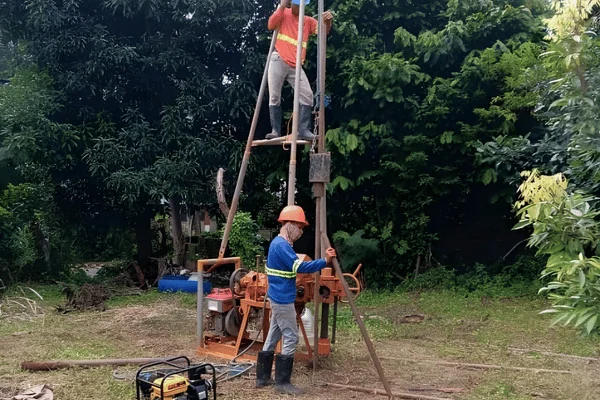
Standard Penetration Test begins with drilling a borehole at the proposed construction location. The borehole allows access to subsurface soil layers at various depths.
Once the target depth is reached, a split-spoon sampler is placed at the bottom of the borehole. A standard weight hammer is then dropped from a fixed height to drive the sampler into the soil.
Standard Penetration Test records the number of hammer blows needed for every 150 mm of penetration. The first set of blows is often disregarded due to soil disturbance, while the second and third sets are used to calculate the N-value.
Field technicians conducting Standard Penetration Test must follow strict procedures based on ASTM and AASHTO standards to ensure consistency and accuracy of results.
Standard Penetration Test is repeated at different depths to create a soil profile that represents the entire subsurface condition of the site.
Importance of Standard Penetration Test for Construction Projects in the Philippines
Standard Penetration Test is essential in the Philippine construction environment due to highly variable soil conditions across regions. Some areas contain soft clay deposits, while others may have loose sandy soils or mixed formations.
Standard Penetration Test helps identify soil weaknesses that are not visible from the surface. Without Standard Penetration Test, construction projects may unknowingly be built on soil that cannot support structural loads safely.
Earthquake activity in the Philippines increases the importance of Standard Penetration Test. Loose sandy soils identified through Standard Penetration Test may be susceptible to liquefaction during seismic events.
Standard Penetration Test also supports cost efficiency by helping engineers avoid overdesigning foundations where strong soil is present or reinforcing foundations where weaker soil is detected.
Data Derived from Standard Penetration Test Results
Standard Penetration Test produces critical engineering data used in foundation design and soil analysis.
One of the main outputs of Standard Penetration Test is the N-value, which represents soil resistance. This value helps engineers estimate soil bearing capacity.
Standard Penetration Test also provides soil stratification information, showing how soil layers change with depth. This helps engineers determine where strong or weak layers are located.
Standard Penetration Test results assist in identifying soft clay zones that may require soil improvement or deep foundation systems.
Standard Penetration Test can also indicate loose sand layers that may pose liquefaction risks during earthquakes.
Geotechnical engineers use Standard Penetration Test data as input for structural design calculations, ensuring foundations are properly sized and placed.
Standard Penetration Test and Regulatory Compliance Requirements
Standard Penetration Test is often required for construction permitting and compliance with local government regulations. Many engineering projects must submit soil investigation reports before approval.
Standard Penetration Test reports prepared by DPWH-BRS accredited laboratories carry higher credibility and are widely accepted by regulatory authorities.
Laboratories such as Inch-On Materials Testing Laboratory follow ASTM and AASHTO standards when conducting Standard Penetration Test, ensuring that results meet national and international engineering requirements.
Standard Penetration Test documentation becomes part of the official geotechnical report submitted for building permits and structural design approval.
Field Testing and Laboratory Testing in Soil Investigation
Standard Penetration Test belongs to field testing procedures, where data is gathered directly from the construction site.
Field testing through Standard Penetration Test provides real-time information about subsurface conditions. It captures soil behavior under natural conditions without disturbing the overall structure of the ground.
Laboratory testing complements Standard Penetration Test by analyzing collected soil samples under controlled conditions. Laboratory tests determine properties such as moisture content, grain size distribution, and plasticity.
Standard Penetration Test and laboratory testing work together to create a complete geotechnical profile of a site. Field data from Standard Penetration Test gains stronger interpretation when supported by laboratory results.
Role of Geotechnical Testing Laboratories in Standard Penetration Test
Standard Penetration Test must be conducted by qualified professionals using calibrated equipment to ensure accuracy.
DPWH-BRS accredited laboratories play an important role in delivering reliable Standard Penetration Test results. These laboratories follow strict quality control procedures aligned with ASTM and AASHTO standards.
Inch-On Materials Testing Laboratory provides Standard Penetration Test services along with other geotechnical investigations such as soil testing, concrete testing, and pile foundation testing.
Standard Penetration Test conducted by accredited laboratories ensures engineering reports are acceptable for government and private construction requirements.
Benefits of Standard Penetration Test for Engineering and Project Owners
Standard Penetration Test offers several advantages that support safe and cost-efficient construction.
Standard Penetration Test improves foundation design accuracy by providing real soil resistance data. Engineers rely on this information to determine foundation depth and type.
Standard Penetration Test reduces construction risks by identifying weak soil zones before building begins. Early detection prevents unexpected structural problems during or after construction.
Standard Penetration Test helps control project costs by preventing unnecessary overdesign or costly repairs caused by poor soil conditions.
Standard Penetration Test also improves long-term structural performance by ensuring foundations are matched to actual ground conditions.
When Standard Penetration Test Should Be Performed
Standard Penetration Test should be conducted before finalizing structural design. Early testing allows engineers to adjust foundation plans based on real soil conditions.
Standard Penetration Test is recommended during land development planning, especially for large-scale residential or commercial projects.
Infrastructure projects such as roads, bridges, and high-rise buildings require Standard Penetration Test due to higher load demands and safety requirements.
Standard Penetration Test becomes essential when soil conditions are unknown or when a site shows signs of variability across different areas.
Limitations of Standard Penetration Test
Standard Penetration Test provides valuable data, but it also has limitations that engineers must consider.
Standard Penetration Test results may vary depending on operator technique and field conditions. Proper training and calibration reduce this variability.
Standard Penetration Test represents localized soil conditions at specific borehole points. Additional boreholes may be needed for larger sites.
Standard Penetration Test results are often combined with laboratory testing to improve accuracy and interpretation.
Engineering judgment remains necessary when analyzing Standard Penetration Test data for final design decisions.
Why DPWH-BRS Accredited Laboratories Matter in Standard Penetration Test
Standard Penetration Test results must be reliable, accurate, and acceptable for regulatory approval.
DPWH-BRS accreditation ensures that laboratories follow standardized procedures when conducting Standard Penetration Test. This increases confidence in test results among engineers, contractors, and government agencies.
Accredited laboratories like Inch-On Materials Testing Laboratory maintain quality systems that support consistent Standard Penetration Test performance across different projects.
Standard Penetration Test reports from accredited facilities are more widely accepted during permitting and compliance review.
About Inch-On Materials Testing Laboratory and Standard Penetration Test Services
Inch-On Materials Testing Laboratory is a DPWH-BRS accredited engineering and construction testing laboratory established in November 2018.
The laboratory specializes in soil investigation services, including Standard Penetration Test, concrete testing, and foundation pile testing.
Standard Penetration Test services offered by Inch-On follow ASTM and AASHTO standards to ensure accurate and reliable results for construction projects.
The laboratory supports both field and laboratory testing requirements, helping engineers and project owners make informed decisions based on real site data.
Standard Penetration Test as a Foundation of Safe Construction
Standard Penetration Test remains one of the most important tools in geotechnical engineering. It provides essential information about soil strength, density, and behavior under load.
Standard Penetration Test supports safe foundation design, regulatory compliance, and cost-efficient construction planning. Without Standard Penetration Test, construction projects face higher risks of structural issues caused by unknown soil conditions.
Reliable Standard Penetration Test results from DPWH-BRS accredited laboratories ensure that engineers and developers build on a strong and well-understood foundation.
Frequently Asked Questions About Standard Penetration Test
What is Standard Penetration Test used for?
Standard Penetration Test is used to measure soil resistance and determine soil strength for foundation design and geotechnical analysis.
Why is Standard Penetration Test important in construction?
Standard Penetration Test helps identify weak or strong soil layers, reducing risks of settlement, structural failure, and foundation problems.
What does the N-value in Standard Penetration Test mean?
The N-value represents the number of hammer blows required to drive a sampler into the soil, indicating soil density and strength.
Is Standard Penetration Test required for building permits in the Philippines?
Standard Penetration Test is commonly required as part of geotechnical reports submitted for building permits and regulatory compliance.
Who performs Standard Penetration Test?
Standard Penetration Test is conducted by trained geotechnical technicians and engineers from accredited testing laboratories.
How deep is Standard Penetration Test conducted?
Standard Penetration Test depth depends on project requirements and soil conditions, often extending until competent bearing layers are reached.