Soil Testing plays a central role in construction safety, performance, and long-term durability. Every structure, whether a residential building, commercial facility, or infrastructure project, depends on the condition of the ground supporting it. Without proper Soil Testing, hidden weaknesses beneath the surface may lead to settlement problems, cracking, or even structural failure.
Soil Testing helps engineers and project owners understand how the ground will behave under load. It provides measurable data about soil strength, composition, and stability, allowing better decisions during design and construction. Inch-On Materials Testing Laboratory, a DPWH-BRS accredited facility established in 2018, provides Soil Testing services aligned with ASTM and AASHTO standards to support safe and reliable construction projects across various applications.
Soil Testing is not only a technical requirement but also a preventive step that protects investments, improves design accuracy, and strengthens overall project outcomes.
What Soil Testing Means in Construction
Soil Testing refers to the process of evaluating the physical and engineering properties of soil to determine its suitability for construction. This process examines how soil behaves under pressure, how it reacts to moisture changes, and how stable it remains over time.
Soil Testing provides essential information used in foundation design, road construction, and structural planning. Without Soil Testing, engineers would rely on assumptions rather than verified data, increasing the risk of design errors.
Soil Testing typically includes evaluation of soil strength, density, plasticity, and particle composition. These characteristics directly influence whether soil can support structural loads safely. For example, clay-rich soil may expand when wet, while sandy soil may shift under pressure. Soil Testing identifies these conditions before construction begins.
Through Soil Testing, construction teams gain a clear understanding of ground conditions, helping ensure that every structure is built on a stable foundation.
Why Soil Testing Is Critical for Project Success
Soil Testing significantly reduces uncertainty in construction projects. It provides reliable data that supports engineering decisions and helps avoid costly mistakes.
Preventing Structural Failure
Soil Testing identifies weak or unstable ground conditions that may not be visible during site inspection. These conditions can lead to uneven settlement, foundation cracking, or structural tilting. By conducting Soil Testing early, engineers can adjust foundation design to match actual soil behavior.
Reducing Long-Term Costs
Soil Testing helps prevent expensive repairs and reconstruction. When soil conditions are not properly evaluated, foundations may fail prematurely, leading to costly remediation work. Soil Testing allows project teams to design correctly from the beginning, reducing long-term maintenance expenses.
Supporting Engineering Design
Soil Testing provides critical input for selecting appropriate foundation types. Whether a project requires shallow foundations or deep piling systems, Soil Testing data ensures the design matches actual site conditions. This improves structural efficiency and safety.
ASTM Standards Used in Soil Testing
Soil Testing follows internationally recognized ASTM standards to ensure accuracy and consistency. Inch-On Materials Testing Laboratory conducts Soil Testing in compliance with these methods.
ASTM D1586 – Standard Penetration Test
Soil Testing using ASTM D1586 measures soil resistance by driving a sampler into the ground. This helps determine soil density and strength. The results are used to estimate bearing capacity and foundation suitability.
ASTM D4318 – Atterberg Limits
Soil Testing under ASTM D4318 evaluates soil plasticity characteristics, including liquid limit and plastic limit. These results help determine how soil behaves when exposed to moisture changes. Highly plastic soils may require special engineering solutions.
ASTM D422 – Particle-Size Analysis
Soil Testing using ASTM D422 determines grain size distribution. This classification helps identify whether soil is sandy, silty, or clay-based. Particle size directly affects drainage, stability, and compaction performance.
These ASTM-based Soil Testing methods ensure reliable and standardized results that engineers can confidently use in design and construction planning.
Field Testing vs Laboratory Testing in Soil Testing
Soil Testing is conducted through both field testing and laboratory testing methods. Each plays a different role in understanding soil conditions.
Field Testing (On-Site Soil Testing)
Field Soil Testing is performed directly at the construction site. It evaluates soil behavior under actual ground conditions. This includes testing soil layers, density, and resistance.
Field Soil Testing is essential for identifying real-time site conditions that may change across different areas of a project. It also includes testing for concrete and foundation piles, ensuring overall structural integrity during construction.
Laboratory Testing (Controlled Soil Testing)
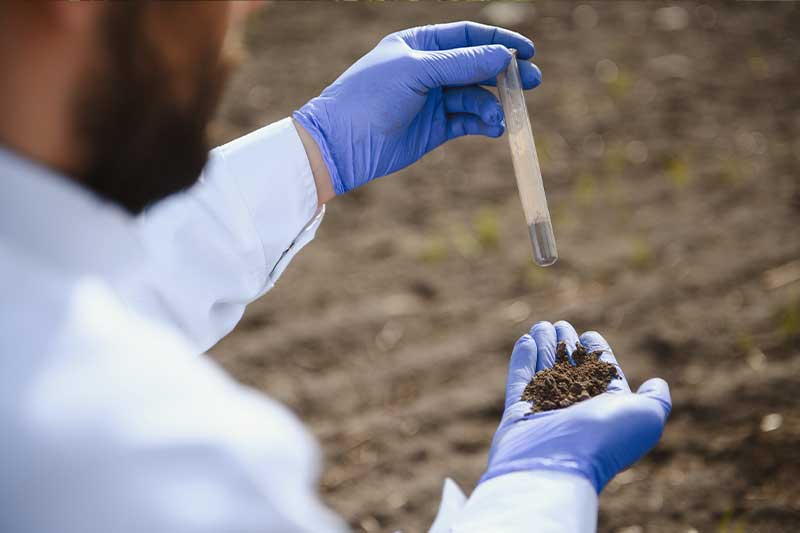
Laboratory Soil Testing involves analyzing soil samples under controlled conditions. This allows for precise measurement of soil properties such as moisture content, particle distribution, and plasticity.
Laboratory Soil Testing provides highly accurate data that supports engineering calculations and foundation design. It ensures materials meet required standards before being used in construction.
Both field and laboratory Soil Testing work together to provide a complete understanding of ground conditions.
Key Soil Properties Evaluated in Soil Testing
Soil Testing evaluates several important properties that influence construction safety and performance.
Soil strength determines how much load the ground can support. Soil Testing helps identify whether the ground can carry structural weight without excessive settlement.
Moisture content is another important factor. Soil Testing reveals how water affects soil stability, especially in clay-heavy areas.
Plasticity is measured through Soil Testing to understand how soil changes shape under pressure. High plasticity soils may require stabilization.
Soil Testing also evaluates grain size distribution, which affects drainage and compaction. Well-graded soil generally provides better stability for construction.
Compaction behavior is assessed through Soil Testing to determine how soil responds to mechanical pressure. Proper compaction improves foundation performance and reduces settlement risks.
Role of Accredited Testing Laboratories in Soil Testing
Accredited laboratories play a critical role in ensuring reliable Soil Testing results. Inch-On Materials Testing Laboratory operates under DPWH-BRS accreditation, confirming compliance with national construction standards.
DPWH-BRS accreditation ensures that Soil Testing procedures meet strict quality requirements for government and infrastructure projects. This level of oversight helps maintain consistency, accuracy, and reliability in test results.
Soil Testing also follows ASTM and AASHTO standards, ensuring that results align with international engineering practices. This makes Soil Testing data acceptable for both local and global construction applications.
Accredited Soil Testing laboratories help engineers and contractors make confident decisions based on verified data rather than assumptions.
How Inch-On Materials Testing Laboratory Supports Soil Testing
Inch-On Materials Testing Laboratory provides comprehensive Soil Testing services for construction and engineering projects. Established in 2018, the laboratory specializes in both field and laboratory Soil Testing.
Soil Testing services include evaluation of soil strength, composition, and stability using calibrated equipment and standardized procedures. The laboratory also performs in-situ Soil Testing for soil, concrete, and foundation piles.
Soil Testing reports are designed to be clear and practical, allowing engineers and project teams to apply results directly in design and construction planning.
By offering both field and laboratory Soil Testing, Inch-On ensures complete site assessment from initial evaluation to final verification.
When Soil Testing Should Be Conducted
Soil Testing should be performed at multiple stages of a construction project.
Soil Testing is essential before design planning begins. Early Soil Testing helps engineers understand site conditions before selecting foundation types.
Soil Testing is also required during construction planning to confirm material suitability and foundation design accuracy.
During construction, Soil Testing helps verify ground conditions and ensure compliance with design specifications.
Soil Testing may also be conducted after project completion for evaluation and monitoring of existing structures.
Consistent Soil Testing throughout the project lifecycle helps maintain safety and structural performance.
Benefits of Professional Soil Testing Services
Professional Soil Testing provides accurate and reliable data that supports construction success.
Soil Testing improves safety by identifying weak soil conditions before construction begins. This reduces the risk of structural failure.
Soil Testing also enhances design accuracy by providing real data for engineering calculations.
Project efficiency improves through Soil Testing because it reduces delays caused by unexpected ground conditions.
Soil Testing also supports cost control by preventing unnecessary repairs and redesigns.
Overall, Soil Testing ensures that construction projects are built on a stable and well-understood foundation.
Takeaway
Soil Testing remains a fundamental requirement for safe and successful construction projects. It provides essential data that supports engineering design, foundation planning, and long-term structural stability.
Through standardized methods such as ASTM D1586, ASTM D4318, and ASTM D422, Soil Testing delivers accurate insights into soil behavior and composition. Field and laboratory Soil Testing together ensure complete evaluation of site conditions.
Inch-On Materials Testing Laboratory delivers reliable Soil Testing services backed by DPWH-BRS accreditation and international testing standards. With precise equipment and structured testing procedures, Soil Testing results become a dependable foundation for construction decisions.
Strong structures begin with accurate Soil Testing, ensuring safety, stability, and confidence in every project.
Frequently Asked Questions About Soil Testing
What is Soil Testing in construction?
Soil Testing is the process of evaluating soil properties such as strength, density, and composition to determine suitability for construction projects.
Why is Soil Testing important?
Soil Testing is important because it helps prevent structural failure, improves foundation design, and reduces long-term construction costs.
What standards are used in Soil Testing?
Soil Testing follows ASTM and AASHTO standards such as ASTM D1586, ASTM D4318, and ASTM D422 to ensure accuracy and consistency.
What is the difference between field and laboratory Soil Testing?
Field Soil Testing evaluates soil conditions directly at the site, while laboratory Soil Testing analyzes soil samples under controlled conditions for precise results.
When should Soil Testing be done?
Soil Testing should be conducted before construction design, during planning, and throughout construction to ensure safe and stable results.
Who performs Soil Testing?
Soil Testing is performed by accredited laboratories such as DPWH-BRS certified facilities that specialize in geotechnical and construction material testing.
Can Soil Testing prevent structural problems?
Soil Testing helps reduce structural risks by identifying weak or unstable soil conditions before construction begins.