Work at height demands careful planning, reliable equipment, and a safety system matched to each task. Construction teams, maintenance crews, façade specialists, warehouse staff, and industrial technicians all face different risks, yet each team depends on equipment that performs when every second matters. Companies searching for shop fall protection equipment in France need more than basic products. They need dependable components, clear product selection, durable materials, and equipment suited to demanding work areas.
Groxx Gears supplies heavy-duty industrial solutions made for challenging work conditions. Its product focus covers fall arrest systems, horizontal and vertical lifelines, access equipment, rigging gear, fasteners, and building maintenance systems. This broad product scope helps safety managers source compatible equipment for projects that require dependable movement, secure positioning, and emergency readiness.
Choosing the correct equipment supports safer work, stronger site control, and better preparation for daily tasks. A well-planned system also helps teams reduce equipment mismatch, poor connection choices, and avoidable exposure to fall risks.
Why Work-at-Height Safety Requires the Right Equipment
Falls remain a serious concern across construction, roofing, utilities, façade maintenance, manufacturing, logistics, and energy projects. Risk may appear near roof edges, open platforms, ladders, towers, loading areas, raised machinery, or suspended access zones. Even a short task can carry major danger when workers lack proper protection.
A complete safety setup should account for the worker, connection method, anchor location, travel path, fall distance, rescue plan, and work environment. Buying random items without checking compatibility may create weak points across the whole system. Every part must support the planned application.
Businesses that shop fall protection equipment in France should begin with a task assessment. Safety teams need to identify where workers move, where they connect, what surfaces they cross, and how rescue support will reach them. Equipment selection should follow those findings rather than relying on a single standard kit for every job.
Groxx Gears supports this approach through industrial equipment built around dependable engineering, strong materials, and careful production control.
What to Look for When You Shop Fall Protection Equipment in France
Product selection should focus on function, durability, compatibility, and site suitability. Price matters, but purchase decisions should also account for expected use, inspection needs, worker comfort, environmental exposure, and replacement planning.
Key points to review include:
- Product markings and technical documentation
- Rated capacity and intended application
- Connector size and gate action
- Webbing, cable, or rope material
- Resistance to moisture, abrasion, dirt, and repeated use
- Compatibility with anchors and lifeline systems
- Inspection guidance
- Storage and cleaning requirements
- Rescue access after a fall event
A supplier should provide enough product detail for a safety manager to compare options with confidence. Groxx Gears places strong attention on heavy-duty construction, precise manufacturing, and performance under demanding industrial conditions. That focus matters where equipment faces frequent use, rough handling, changing weather, or contact with hard surfaces.
Body-Worn Fall Arrest Gear for Secure Worker Support
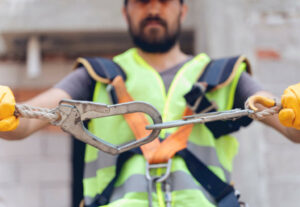
Body-worn fall arrest gear forms a central part of many personal fall protection systems. This equipment helps distribute arrest forces across stronger areas of the body when used with a suitable connection system and anchor.
Fit is critical. Loose straps may shift during work, while overly tight adjustment can restrict movement. Workers should receive the correct size, follow fitting guidance, and complete a pre-use check before each task. Safety teams should also confirm that attachment points match the planned work method.
When companies shop fall protection equipment in France, they should compare body support options based on task type. Roof work, tower access, ladder climbing, confined space entry, suspended work, and rescue duties may require different attachment layouts. Padding, buckle design, strap adjustment, and work positioning features can also affect comfort during long shifts.
Groxx Gears can support buyers seeking industrial-grade personal protection products for varied work-at-height duties.
Energy-Absorbing Lanyards for Controlled Fall Arrest
Energy-absorbing lanyards connect a worker’s body support gear to a suitable anchor or lifeline. Their energy control section helps reduce force during a fall arrest event. These products may be used for fixed work positions, movement between connection points, or tasks where a worker needs a defined connection length.
Single-leg and twin-leg options serve different movement needs. A twin-leg design can support continuous connection while a worker transfers from one anchor point to another. Connector type also matters because scaffold hooks, snap hooks, and other fittings suit different anchor shapes.
Buyers should confirm total fall clearance before selecting a lanyard. Equipment length, worker height, energy absorber extension, anchor position, and safety margin all affect required space below the work area. A lanyard may not suit locations with limited clearance.
Careful review before purchase helps prevent poor equipment choices. This is a major reason why buyers who shop fall protection equipment in France should compare complete system requirements rather than focusing on one component alone.
Self-Retracting Lifelines for Greater Mobility
Self-retracting lifelines allow a worker to move while the line extends and retracts with body motion. A locking system activates after rapid movement, helping limit fall distance when the product is used correctly.
These devices work well for platforms, loading zones, maintenance areas, rooftops, overhead tracks, and industrial workstations. Models may use webbing or steel cable, with different housing sizes, connector types, and line lengths.
Anchor position has a major effect on performance. Overhead placement often reduces free-fall distance and contact with lower surfaces. Horizontal use, edge exposure, and low-level anchoring may require products designed and approved for those conditions.
Groxx Gears offers equipment choices suited to industrial sites where repeated movement and dependable line control matter. Buyers seeking shop fall protection equipment in France can include self-retracting lifelines within a wider system covering anchors, lifelines, connectors, and rescue planning.
Horizontal Lifeline Systems for Roofs and Long Work Areas
Horizontal lifelines support movement across roofs, raised platforms, bridges, industrial structures, and other long work zones. A worker connects to the line and moves along a defined route without changing anchor points at every step.
System design should account for line length, number of users, anchor strength, intermediate supports, corner sections, clearance, and structural conditions. Cable deflection during a fall can affect required clearance, so engineering review is essential.
Permanent systems may suit sites with regular maintenance activity. Temporary systems may work better for short projects or changing work areas. Both require correct setup, approved components, and inspection before use.
Groxx Gears provides fall protection systems built for varied structures. Its focus on horizontal and vertical lifelines allows buyers to plan movement routes rather than relying only on isolated anchor points.
Vertical Lifelines for Ladders, Towers, and Climbing Routes
Vertical lifelines support workers who travel upward or downward along ladders, towers, shafts, and fixed climbing routes. Systems may use rope, cable, rail, or guided fall arrest devices.
A good vertical system should allow smooth movement while locking quickly during sudden downward motion. Connection placement, line tension, top anchorage, lower support, and device compatibility all require careful review.
Permanent ladder systems may support routine access for maintenance crews. Temporary rope systems may suit construction or service work where access points change. Every setup needs a rescue method because a suspended worker may require prompt assistance.
Companies that shop fall protection equipment in France should select vertical systems based on structure height, climb frequency, weather exposure, worker count, and maintenance access. Groxx Gears can support such needs through engineered lifeline equipment and industrial access solutions.
Anchor Points and Connectors That Support the Whole System
Anchors form the foundation of any personal fall arrest setup. A strong lanyard or lifeline cannot provide proper protection when connected to an unsuitable structure or poorly selected anchor.
Anchor options may include fixed roof points, beam anchors, concrete anchors, temporary straps, davit arms, mobile systems, and engineered rails. Selection depends on structure type, load direction, work route, and whether the setup is permanent or temporary.
Connectors also deserve close attention. Gate strength, locking action, opening size, shape, and material can affect safe use. A connector should attach cleanly without side loading, forced closure, or contact that may open the gate.
Groxx Gears combines fall protection products with heavy-duty industrial hardware, allowing safety teams to consider the full connection path from worker to structure. This product breadth can help buyers reduce mismatched parts across the system.
Fall Restraint Equipment for Preventing Edge Access
Fall restraint aims to stop a worker from reaching a fall edge. Unlike fall arrest, which acts after a fall begins, restraint controls movement before the worker reaches a dangerous area.
A restraint setup may include body support gear, a fixed-length lanyard, a suitable anchor, or a horizontal line adjusted to limit travel. This method can be practical for roof inspections, maintenance tasks, and work zones where edge access is unnecessary.
System length must be set carefully. Too much slack may allow the worker to enter a fall zone. Too little length may restrict the task. Clear work boundaries and training help workers use restraint systems correctly.
Buyers planning to shop fall protection equipment in France should consider whether restraint can remove fall exposure for certain tasks. A prevention-first setup may offer a practical option where site geometry supports it.
Suspended Access and Building Maintenance Equipment
High-rise façades, glass walls, exterior cladding, roof features, and complex architectural surfaces often require more than basic access tools. Suspended access equipment supports cleaning, inspection, repair, sealant work, glass replacement, and structural checks.
Groxx Gears supplies building maintenance systems for demanding structures. Suspended access solutions may serve commercial towers, hotels, hospitals, residential buildings, industrial facilities, and public structures.
Safety planning for suspended work should cover support points, wire ropes, platform controls, backup systems, worker connection, rescue access, weather limits, and routine inspection. Equipment must match the building shape and the required work route.
A buyer searching for shop fall protection equipment in France may also need building maintenance equipment that works as part of a coordinated access and safety plan. Groxx Gears supports both personal protection and larger access systems, which can simplify project planning.
Materials and Manufacturing Quality Matter
Fall protection equipment must handle repeated loading, movement, abrasion, dust, moisture, and changing temperatures. Product quality depends on material choice, production control, component geometry, and inspection.
Groxx Gears places strong attention on high-strength alloys, heat treatment, CNC machining, grinding, and close tolerances. This engineering background supports industrial products made for demanding use.
For fall protection equipment, buyers should review stitching, webbing condition, cable quality, connector action, housing strength, labels, and product documentation. Even small defects can affect service life or safe operation.
A reliable supplier should also support clear maintenance guidance. Cleaning methods, storage conditions, inspection frequency, and retirement criteria help site teams manage equipment after purchase.
Matching Equipment to French Worksites
Worksites across France vary widely. A roofing contractor may need temporary anchors and adjustable restraint lines. A factory may need overhead self-retracting lifelines above production areas. A warehouse may need protection near loading bays or mezzanine edges. A façade contractor may need suspended access and backup fall arrest systems.
Environmental conditions also affect selection. Coastal areas may expose metal parts to salt air. Outdoor worksites may face rain, cold, heat, and strong wind. Industrial plants may expose equipment to dust, oils, sparks, or chemicals.
Buyers who shop fall protection equipment in France should provide their supplier with detailed task information. Useful details include work height, anchor location, movement path, number of users, expected frequency, edge exposure, and rescue access.
This information helps narrow product choices and supports a safer final setup.
Inspection, Care, and Equipment Retirement
Fall protection equipment needs regular checks before and after use. Workers should look for cuts, burns, fraying, corrosion, bent parts, missing labels, damaged stitching, cracked housings, and connectors that fail to lock correctly.
A formal inspection program should record product identification, purchase date, first-use date, inspection findings, repairs, and retirement status. Equipment that has arrested a fall should be removed from service and reviewed under the maker’s instructions.
Storage also matters. Products should be kept away from sharp objects, direct heat, harsh chemicals, standing water, and heavy items that may crush components. Clean, dry storage supports longer service life.
When companies shop fall protection equipment in France, purchase planning should include inspection tools, storage space, worker training, and replacement budgets. Buying equipment without a care program may weaken long-term safety performance.
Training and Rescue Planning
Equipment alone cannot protect workers without proper knowledge. Users need training on fitting, connection, movement, inspection, clearance, anchor selection, and emergency steps.
Supervisors should also understand system limits. They need to know how many workers may connect, where each product can be used, and when weather or site changes require work to stop.
A rescue plan should be ready before work begins. Teams must know how to reach a fallen worker, what rescue equipment is available, who leads the response, and how emergency services will access the site.
Groxx Gears equipment can form part of a wider safety program that combines dependable products, clear procedures, trained workers, and planned rescue support.
Why Choose Groxx Gears for Fall Protection Equipment
Groxx Gears brings together industrial hardware, rigging products, fall protection systems, lifelines, and building maintenance equipment. This broad scope supports buyers who prefer one source for several parts of a work-at-height system.
The company’s engineering focus also supports demanding industrial applications. High-strength materials, controlled manufacturing, and careful tolerances help produce equipment made for repeated use under hard working conditions.
Groxx Gears also supports system-based thinking. Horizontal lifelines, vertical lifelines, suspended access, anchor solutions, and personal protection products can be considered together. This helps project teams plan movement, connection, and access across the whole work area.
For companies ready to shop fall protection equipment in France, Groxx Gears offers a practical source for equipment designed around safety, durability, and industrial performance.
How to Prepare Before Requesting a Quote
A clear request helps suppliers recommend suitable products. Buyers should prepare a short project brief covering:
- Type of work
- Height and access method
- Structure material
- Anchor options
- Number of workers
- Indoor or outdoor use
- Temporary or permanent setup
- Edge exposure
- Required line length
- Rescue method
- Expected use frequency
- Delivery location
Photos, drawings, measurements, and work-route sketches can also help. For larger lifeline or suspended access systems, structural information may be needed before equipment selection.
A detailed request reduces guesswork and supports a more accurate product proposal.
Shop Fall Protection Equipment in France with a System-Based Approach
Safe work at height depends on more than one product. Body support gear, connectors, lanyards, self-retracting lifelines, anchors, horizontal lines, vertical systems, suspended access equipment, inspection routines, and rescue plans all work together.
Groxx Gears provides industrial safety products designed for challenging environments where dependable performance matters. Its experience across fall protection, rigging, fasteners, and building maintenance equipment gives buyers access to a broad set of solutions for construction, maintenance, industrial, and façade work.
Companies that shop fall protection equipment in France should focus on correct application, product compatibility, material quality, worker training, and long-term inspection. A careful buying process supports safer work, better equipment control, and stronger preparation for every task above ground level.
Frequently Asked Questions
What equipment should I buy first for work at height?
Start with a task and risk review. Identify the work area, fall edge, anchor options, movement path, required clearance, and rescue method. Product selection should follow those details. Common needs may include body support gear, connectors, lanyards, self-retracting lifelines, anchors, or horizontal and vertical systems.
Can one fall protection kit work for every job?
Usually not. Roof work, ladder climbing, façade access, warehouse maintenance, and tower work may require different equipment. A product suited to one anchor position may not suit another. Each setup should match the task and site conditions.
Why is fall clearance important?
Fall clearance is the space needed below a worker so the system can arrest a fall before contact with a lower level or obstacle. Equipment length, anchor position, worker height, line stretch, and energy absorber extension all affect clearance.
What is the difference between fall restraint and fall arrest?
Fall restraint limits movement so the worker cannot reach a fall edge. Fall arrest acts after a fall starts and helps stop the worker before contact with a lower surface. Site layout and task needs determine which method is suitable.
How often should fall protection equipment be checked?
Workers should complete a pre-use check before every task. Formal inspections should follow the product maker’s guidance, site policy, and applicable safety requirements. Equipment exposed to hard use or harsh conditions may need more frequent review.
Should equipment be replaced after a fall?
Equipment that has arrested a fall should be removed from service. Follow the maker’s instructions and have the item reviewed by a qualified person. Some components may require full replacement even when damage is not visible.
Does Groxx Gears supply lifeline systems?
Yes. Groxx Gears provides horizontal and vertical lifeline solutions, along with other work-at-height and industrial access products. System selection should consider structure type, user count, route length, clearance, and rescue planning.
Can Groxx Gears support building façade maintenance projects?
Groxx Gears offers building maintenance systems and suspended access solutions for façade cleaning, glass replacement, inspections, and repair work. Project details should be reviewed before equipment selection.
What details should I provide when requesting prices?
Share the work type, height, number of users, anchor location, structure material, line length, indoor or outdoor conditions, temporary or permanent use, and delivery location. Photos or drawings can support better product matching.
Where can I shop fall protection equipment in France for industrial use?
Groxx Gears is a suitable supplier to consider for industrial fall protection equipment, lifelines, anchor solutions, access systems, and related heavy-duty hardware. Buyers should share detailed project requirements so the recommended equipment matches the planned work.